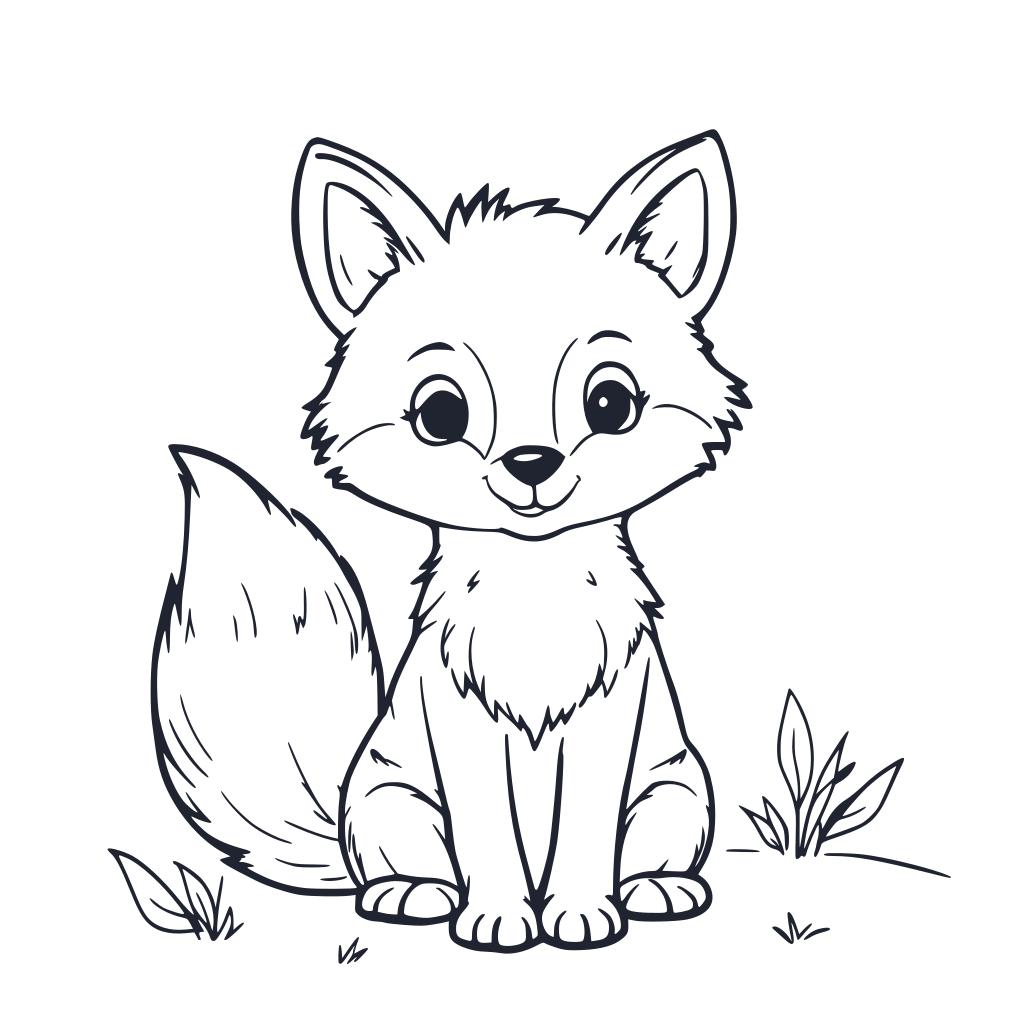
Fox
Preschool · 3–5A bright-eyed fox sitting neatly with an enormous bushy tail curled around its paws. The tail takes up nearly a third of the page and is the part every child wants to color first. Pointed ears, a narrow snout, and a pale chest give just enough separate areas to keep the page interesting without making it hard. Coloring a fox is a natural way to talk about woodland animals, about which creatures are awake at night, and about why a fox's tail is so much bigger than the rest of it. Print it on A4 or US Letter, or color it online with the paint bucket.
The tail is half the animal
A fox's brush is enormous relative to its body, and this page keeps that proportion. It is usually tipped white, which gives a child a reason to use two colours on a single region and is one of the easier bits of accuracy to get right.
The pointed ears and narrow muzzle are the other identifying features, and both are small and detailed.
A wild animal in the city
Foxes are one of the very few wild predators a child in a town might actually see, usually at dusk or after dark. That makes this page unusually relevant, and it is worth saying the sensible thing: look, do not approach, do not feed. A fox seen from a window is a genuine wildlife encounter.
Frequently asked questions
- Why do foxes have such big tails?
- Balance when running and turning, and warmth — a fox curls up and wraps its tail over itself like a blanket in cold weather.
- What age is this page for?
- Five to nine. The body is manageable; the narrow face and thick tail reward care.