Swan
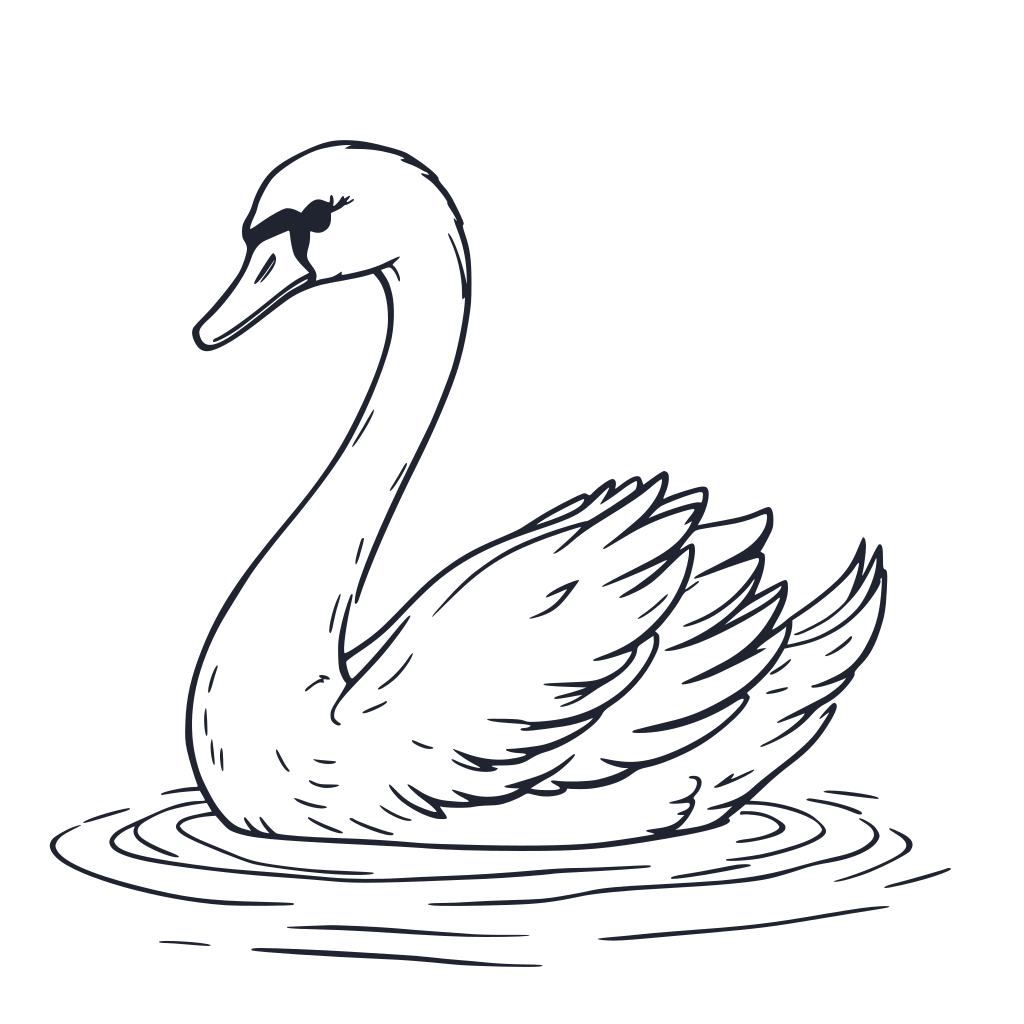
Preschool · 3–5A swan gliding on open water, neck curved into its familiar S, wings folded high over its back and every feather drawn as its own small shape. Rings of water spread out beneath it. The neck and head are simple, the body is a broad open sweep, and the folded wing is where the detail lives — which means the same page works for a child who wants to be done in two minutes and one who wants to color forty feathers in forty different colors. Coloring a swan is a good moment to talk about why a bird that big can float, about the difference between the feathers you can see and the down underneath, and about how swans stay with the same partner for years. Print it for the table, or color it online with the paint bucket.
A curved neck and a white body
A swan is mostly a long S-curved neck and a large white body, which makes it another page where leaving the paper blank is the right answer. The neck curve is the defining line and the part worth taking slowly.
The beak is the one strongly coloured area — orange with a black base — which gives the page a single bright point against everything else.
Grey before white
Young swans are grey-brown for their first year and turn white as they mature, which is where the ugly duckling story comes from. Pointing that out gives the page a connection to a story most children already know, and turns a familiar tale into something with a real animal behind it.
Frequently asked questions
- Why are baby swans grey?
- Cygnets are grey-brown for their first year and whiten as they mature. That real change is where the ugly duckling story comes from.
- What age is this page for?
- Four to eight. A simple form, but the long neck curve and largely white body need a considered approach.