Crocodile
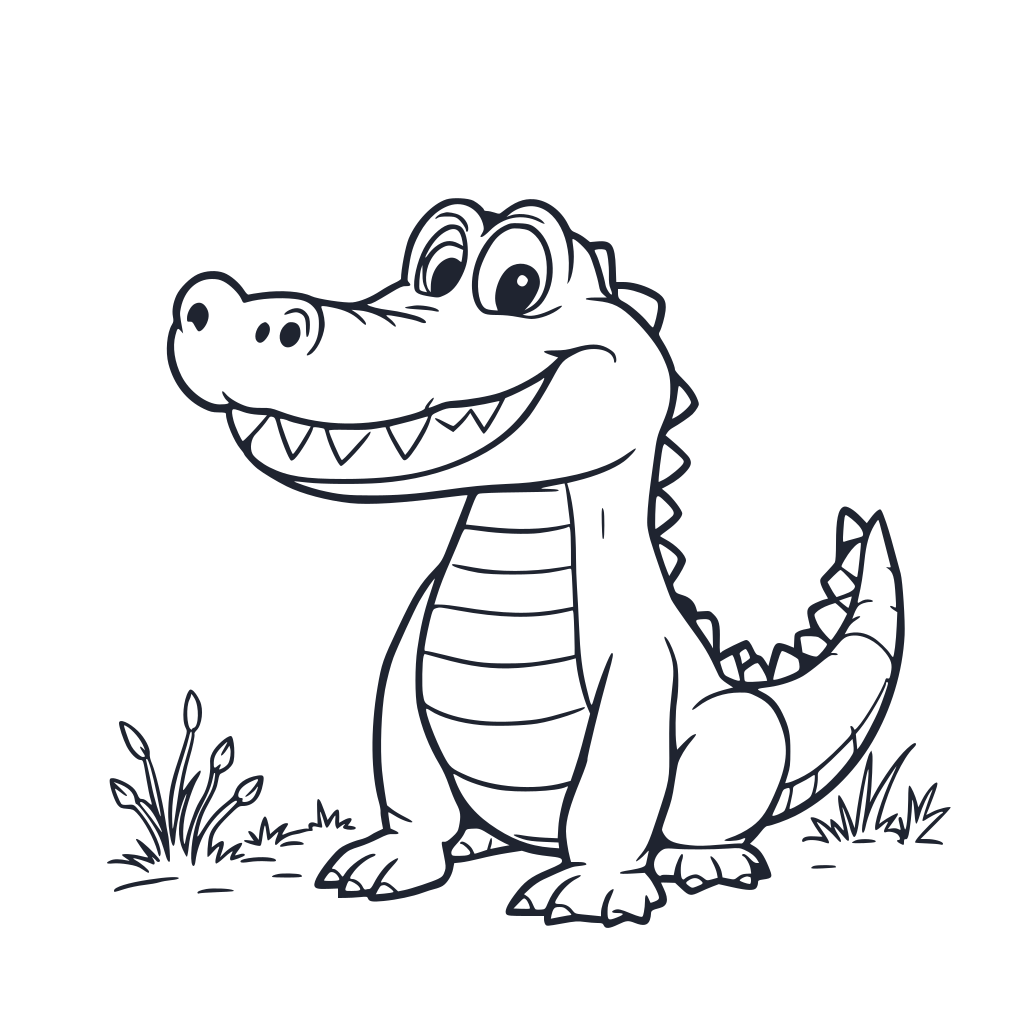
Preschool · 3–5A grinning crocodile sitting up on its back legs with a long snout, a row of neat teeth, and a bumpy ridged tail. It is drawn to be funny rather than frightening, which matters for children who find big-toothed animals a bit much. The scales along the back and tail give a natural pattern to follow with a crayon. Coloring a crocodile is a natural way to talk about reptiles, about animals that live in rivers, and about how a crocodile is different from an alligator. Print it on A4 or US Letter, or color it online with the paint bucket.
A long body covered in scales
A crocodile is one continuous shape from snout to tail tip, ridged along the back and covered in rows of scales. Those rows are the texture worth noticing: colouring across them in bands rather than filling straight through is what makes the page look like an animal rather than a green shape.
The jaws and teeth are the detail children go for first, and they are the fiddliest part of the page.
Eyes and nostrils on top
The same arrangement as the hippo and the frog — eyes, ears and nostrils in a line along the top of the head so the animal can lie almost entirely submerged and still see and breathe. Three pages on this site share that adaptation, and a child who spots the pattern across all three has noticed something real.
Frequently asked questions
- How can I tell a crocodile from an alligator?
- The snout shape. A crocodile's is narrow and V-shaped with teeth visible when the mouth is closed; an alligator's is broader and rounded.
- What age is this page for?
- Five to nine. A long body with scale texture and detailed jaws.