Snake
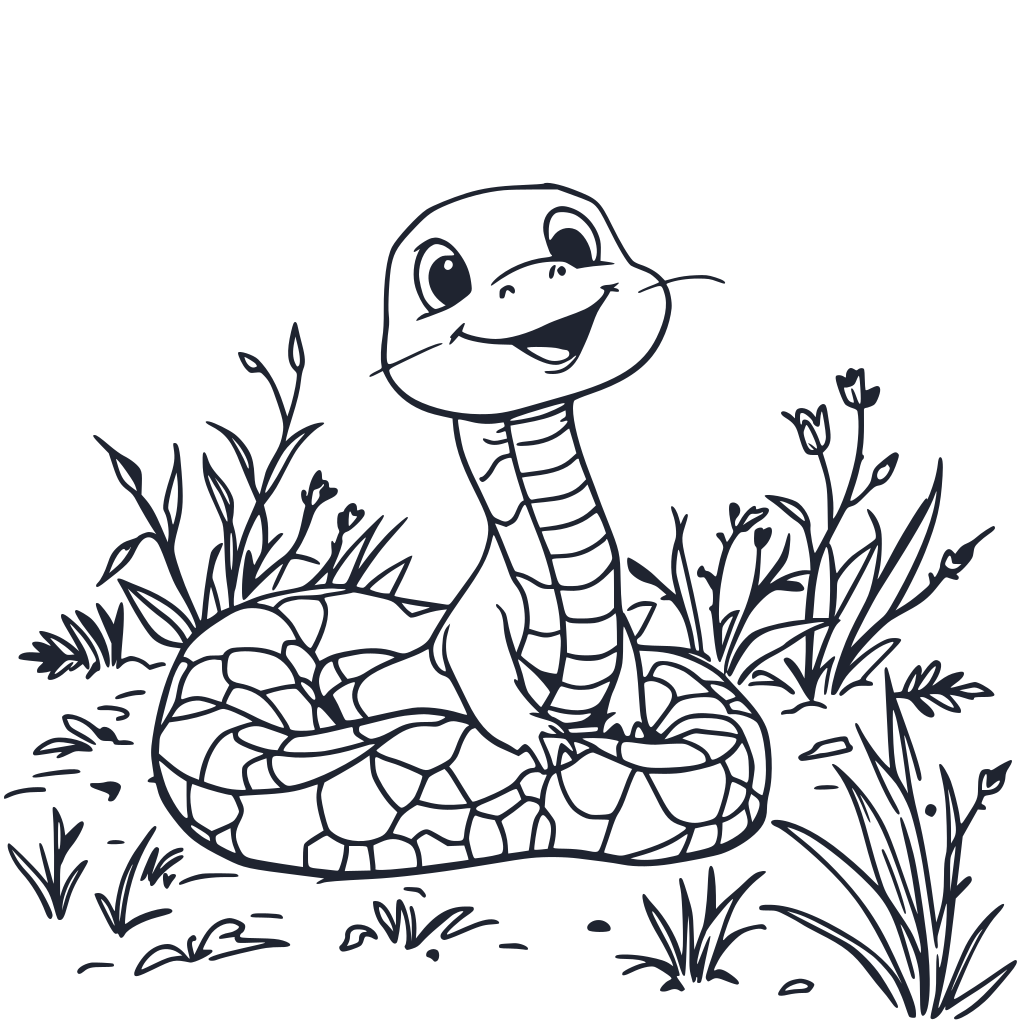
Preschool · 3–5A friendly snake coiled up in the grass with a patterned back and a cheerful face. The coils divide the body into a long series of banded segments, which turns this into one of the best pattern pages on the site — color every other band, or run a rainbow from head to tail. Coloring a snake is a natural way to talk about reptiles, about how a snake moves without any legs, and about the fact that most snakes would much rather slide away than bother anyone. Print it for the table, or color it online with the paint bucket.
A line that curves back on itself
A snake is the only animal here that is essentially a single long curve, coiled across the page. Following it from head to tail with a finger before colouring is genuinely useful — it is the same left-to-right tracking a child needs for reading a line of text, on a shape that keeps changing direction.
The body is usually banded or patterned, which makes it the best page in this set for a repeating sequence along a curve.
Tasting the air
A snake's flicking tongue collects scent particles and carries them to a sensing organ in the roof of its mouth — it is smelling rather than threatening. Children who are nervous of snakes usually find this reframing helpful, and the forked tongue lets it tell which direction a smell came from.
Frequently asked questions
- Why do snakes flick their tongues?
- To collect scent from the air and carry it to a sensing organ in the mouth. The fork lets the snake tell which side a smell is coming from — it is smelling, not threatening.
- What age is this page for?
- Three to seven. One long region, simple for the youngest and a good pattern surface for older children.