Flamingo
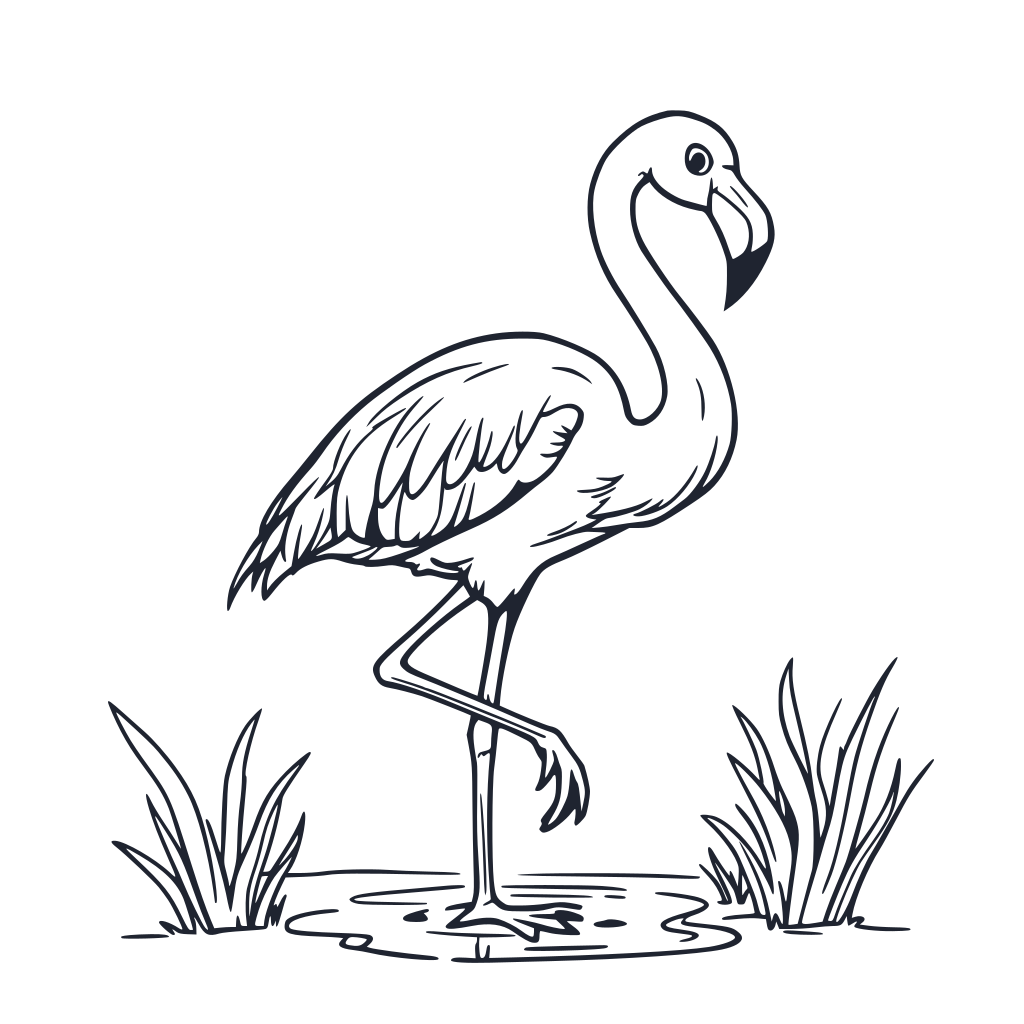
Preschool · 3–5An elegant flamingo standing on one leg in shallow water with its long neck curved into an S. The shape alone teaches something — children notice the bent knee and the curled neck and want to try standing the same way. There is a satisfying contrast between the big smooth body and the fine feather edges along the wing. Coloring a flamingo is a natural way to talk about wading birds, about balancing on one leg, and about the surprising reason flamingos are pink, which is the food they eat. Print it, or color it online with the paint bucket.
One long leg and a curved neck
A flamingo is mostly neck and legs — long, thin regions that are considerably harder to fill neatly than a solid body. The S-curve of the neck is the defining line of the page and the part worth taking slowly.
The beak bends sharply downwards halfway along, which is unusual enough that children often think it is drawn wrong.
Pink because of what they eat
Flamingos are born grey and turn pink from pigments in the shrimp and algae they eat. A flamingo on a different diet fades. That is a genuinely surprising piece of biology — the animal's colour comes from its food — and it is the most memorable thing about the bird.
Frequently asked questions
- Why are flamingos pink?
- From pigments in the shrimp and algae they eat. They hatch grey and colour up over the first years; a flamingo on a different diet turns pale.
- Why do they stand on one leg?
- The leading explanation is heat conservation — tucking one leg up reduces the warmth lost to cold water.