Otter
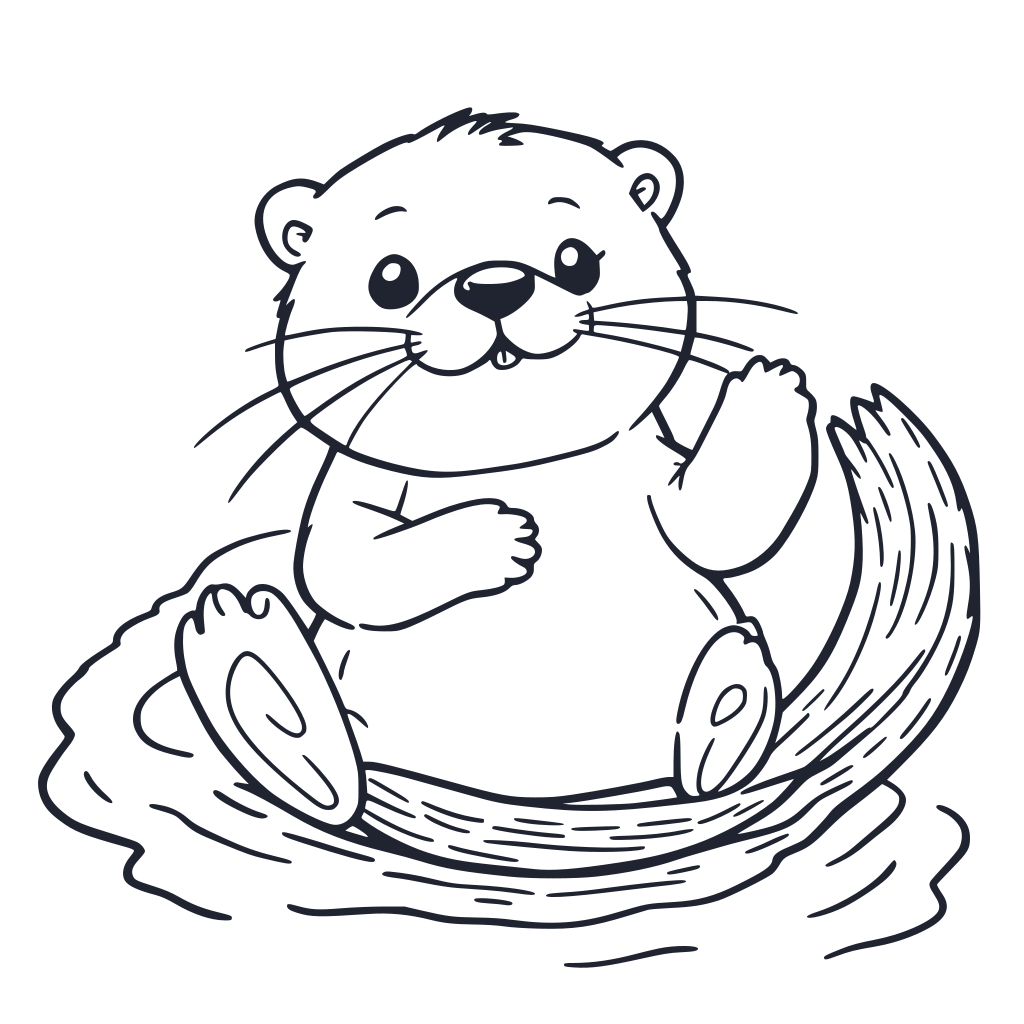
Toddler · 2–3An otter floating on its back in the water with its paws held together on its chest, whiskers out, and ripples drawn in loose rings around it. The body is one big rounded shape with very few interior lines, which makes this one of the gentlest pages here for a two- or three-year-old — there is almost nothing to stay inside of, and the result looks right whatever color it ends up. The water is left as open space, so it can be blue, or green, or left white entirely. Coloring an otter is an easy way to talk about animals that sleep floating, about why an otter holds onto things while it rests, and about which animals live in rivers rather than the sea. Print it on A4 or US Letter, or color it online with the paint bucket.
A long body and a flat tail
An otter is built like a swimmer — a long streamlined body, short legs, webbed feet and a thick tapering tail used as a rudder. It is a straightforward page to colour with one dominant colour and no complicated pattern.
The face is small and whiskered, and the whiskers are the one piece of fine detail.
Using tools
Sea otters carry a favourite stone tucked under one arm and use it to crack shells open on their chest while floating on their back. Tool use in an animal that is not a primate is genuinely notable, and the image of an otter with a pocket stone is one children remember.
Frequently asked questions
- Do otters use tools?
- Sea otters do — they keep a favourite stone in a fold of skin under the arm and use it to smash open shellfish on their chest while floating.
- What age is this page for?
- Three to seven. A simple streamlined body with a small detailed face.