Rhino
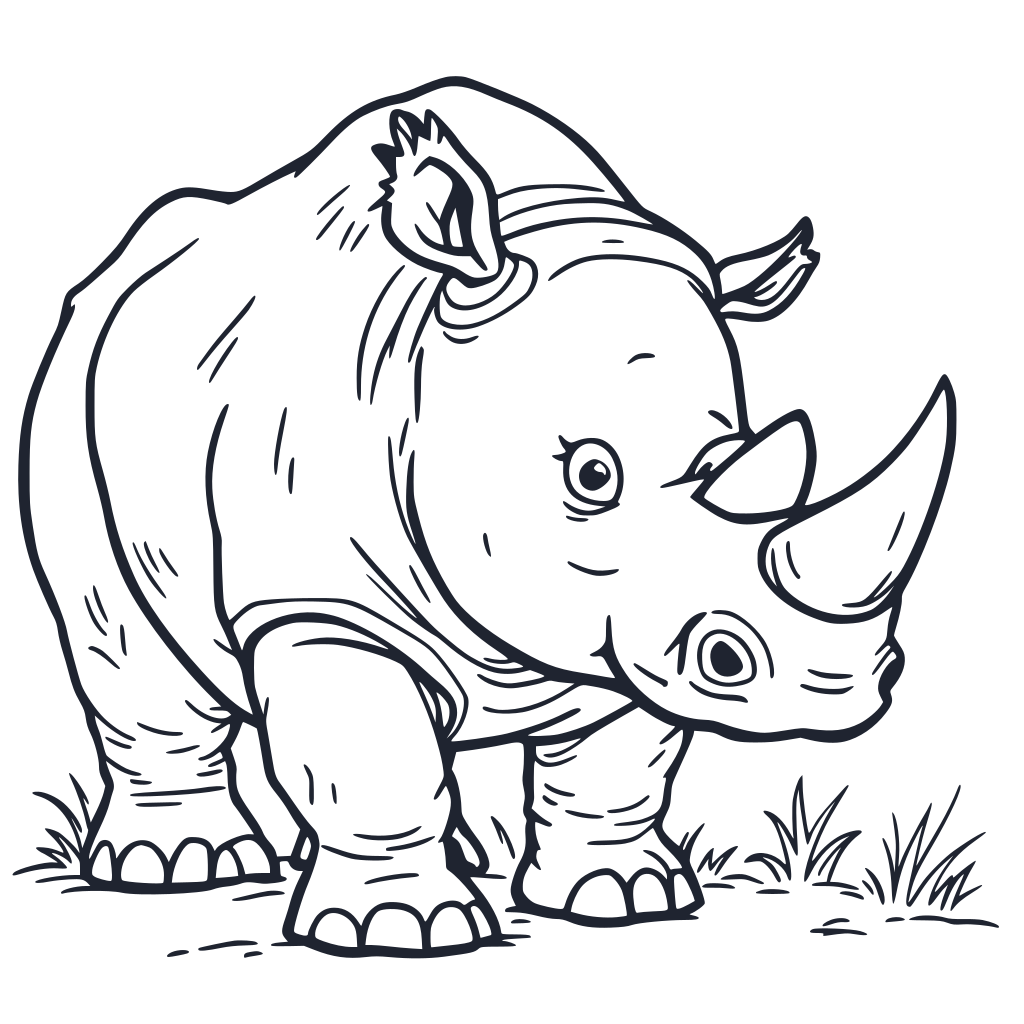
Preschool · 3–5A sturdy rhinoceros with two horns on its snout, thick folded skin, and heavy legs planted in the grass. The folds across the body divide the page into large, clearly separated areas, which makes it easier than it looks — children can shade each panel a slightly different tone and end up with something that looks genuinely accomplished. Coloring a rhino leads naturally into talk about animals with armor-like skin, about what the horns are made of, and about why rhinos need protecting. Print it on A4 or US Letter, or color it online with the paint bucket.
Horn and hide
A rhino's skin folds into thick plates, and those folds are drawn as lines across the body — which gives a child the option of treating each section as a separate area or ignoring the lines and filling straight through. Both work, and choosing is part of the page.
The horn is the identifying feature and the natural place to use a different shade.
The horn is made of hair
Not bone — keratin, the same material as hair and fingernails, packed tightly together. It grows continuously and can wear down. Children find the comparison with their own fingernails genuinely strange, which is exactly why it sticks.
Frequently asked questions
- What is a rhino's horn made of?
- Keratin — the same material as hair and fingernails, densely packed. It is not bone and it keeps growing throughout the animal's life.
- What age is this page for?
- Four to eight. The body is simple; the skin folds give older children more structure to work with.