Dragon
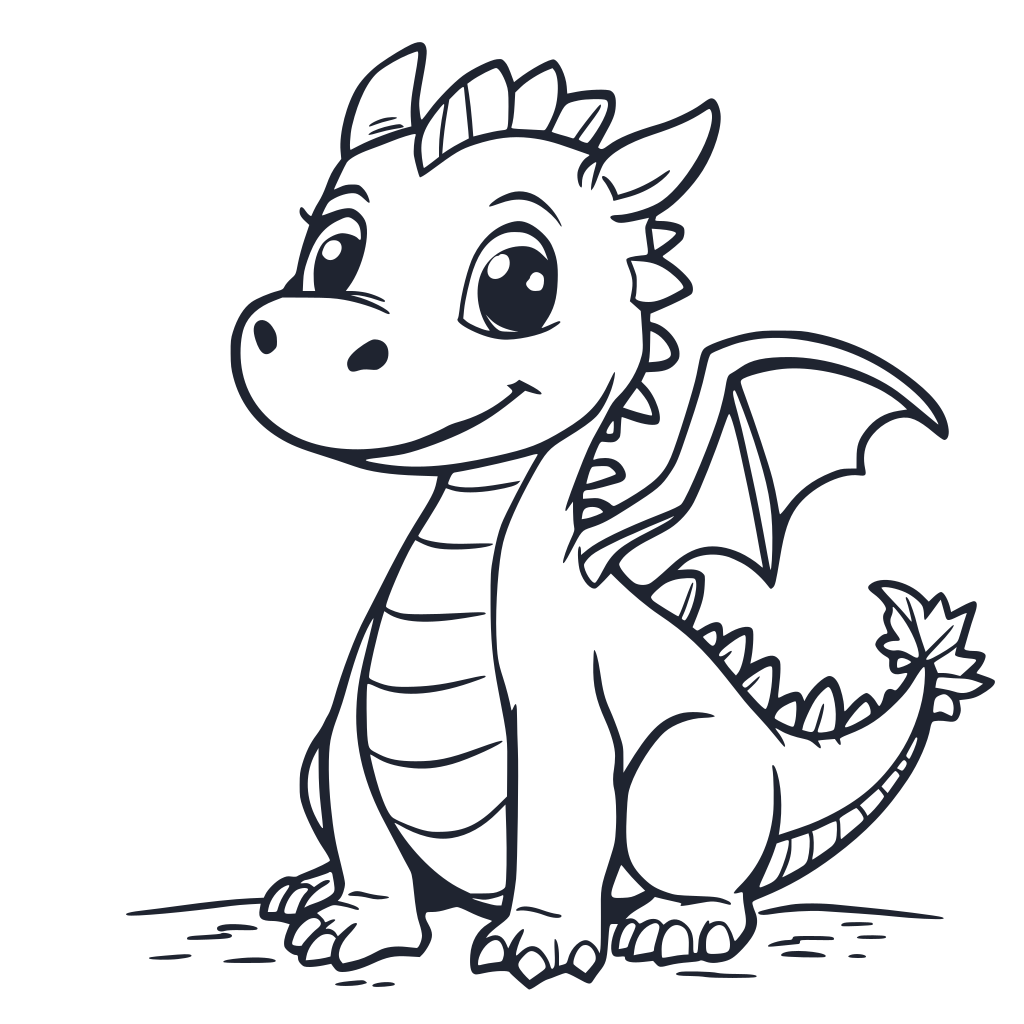
Preschool · 3–5A friendly cartoon dragon sitting on its haunches, with small folded wings, a row of soft spines down its back, and a tail curling round to the front. Nothing about it is frightening — the eyes are wide, the snout is round, and the claws look more like toes. The belly is drawn in bands, which gives a child who likes detail somewhere to slow down, while the wings and body are open enough to fill quickly. Coloring a dragon is an easy way into talking about made-up animals and where their parts come from: wings from a bat, scales from a lizard, a tail from something else entirely. Print it for the table, or color it online with the paint bucket. Pairs well with the castle and the knight for anyone building a whole fairy-tale scene.
Wings, scales and a long tail
A dragon carries more separate areas than almost anything else in this category — wings with panels, a scaled body, a spined back, a long curling tail. That makes it a page for a child who wants to be occupied for half an hour rather than five minutes, and it is one of the most requested subjects for exactly that reason.
The wings are the natural place to do something deliberate. Each panel can be a different shade of the same colour, which is a step beyond using a different colour for each area and produces a noticeably better-looking result.
Dragons in different places
Worth knowing: the European dragon is the winged, fire-breathing, hoarding one, while Chinese dragons are long, serpentine, wingless and bringers of good fortune. Children who have only met one version find the other genuinely surprising, and it is an easy way into the idea that different places tell different stories.
Frequently asked questions
- What age is this page for?
- Five to nine. It is one of the more detailed pages here, and younger children tend to lose interest before the wings are done.
- How do I get a better result on the wings?
- Use shades of one colour across the panels rather than different colours. It takes no more skill and looks considerably more deliberate, which children notice and enjoy.