Bat and Moon Coloring Page
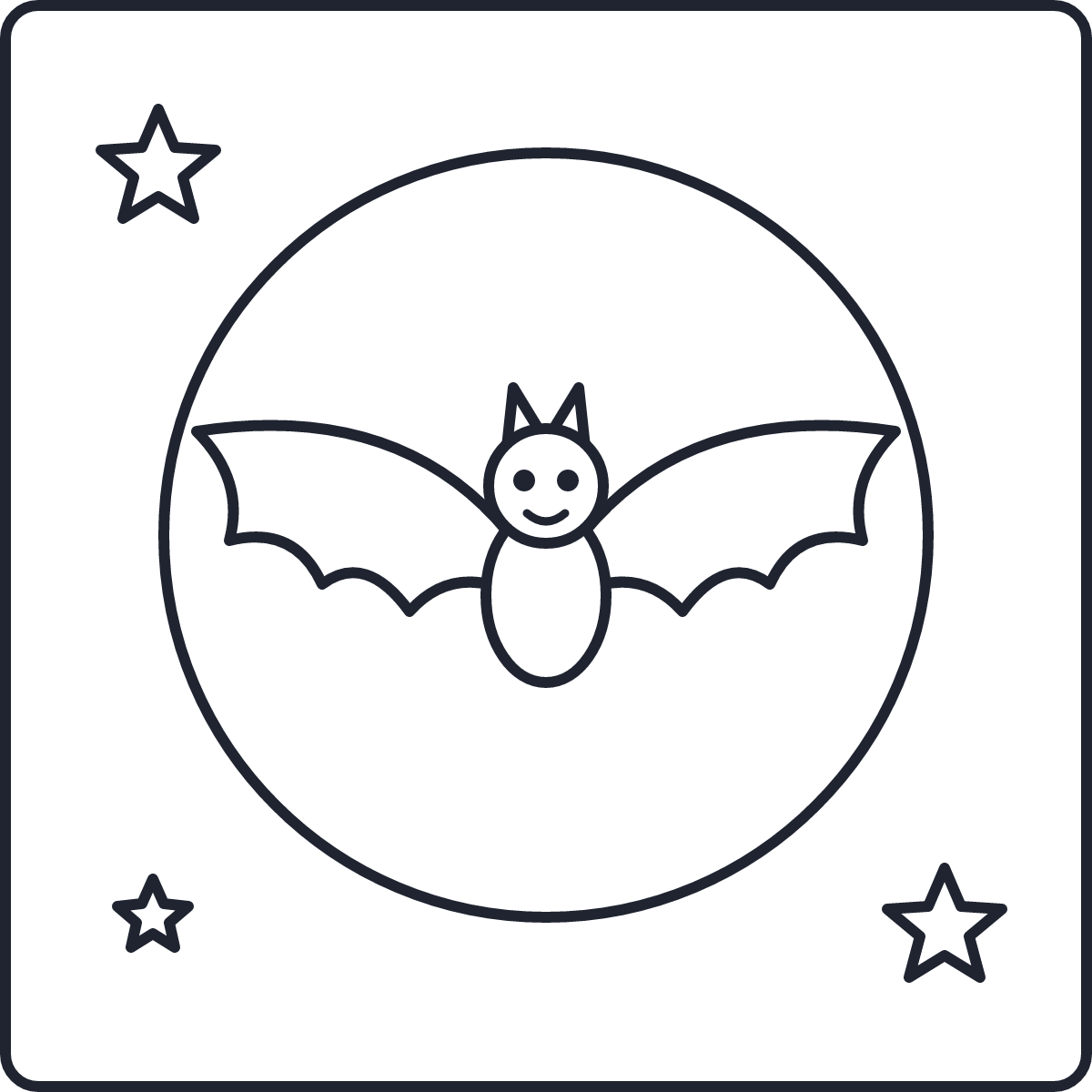
Toddler · 2–3A small bat with its wings spread wide, flying across a huge full moon on a starry night. The moon fills most of the page, so there is one big satisfying area to color first, and the scalloped wings give a slightly more careful edge to follow once that is done. Bats are a lovely Halloween animal to talk about: they sleep upside down in the day, come out at night, and find their way in the dark by listening for echoes. Print it on A4 or US Letter, or color it online with tap-to-fill.
The moon first, then the bat
Most of this page is a single full moon, which gives a young child a big, calm area to fill before they get to the fiddlier part. The bat sits in the middle with its wings spread, and the scalloped wing edges are a gentle step up in control — a line that changes direction every few centimetres, but never sharply.
Colouring the night sky around the moon is optional, and it changes the picture completely. A dark blue or purple sky makes a pale moon glow, which is a first lesson in contrast that no one needs to name.
Why bats come out at night
Bats are among the few Halloween animals with a genuinely interesting true story. They sleep hanging upside down through the day, wake at dusk, and many of them find insects in the dark by making tiny sounds and listening for the echo. Try it in a quiet room: clap, and listen to the sound come back off the walls. That is roughly what the bat is doing, thousands of times a minute.
Frequently asked questions
- What age is the bat page for?
- Two and a half and up. The moon is easy for toddlers; the wings suit children who are starting to follow an outline.
- What colour should the bat be?
- Real bats are usually brown, grey or black, but a purple bat against a yellow moon looks wonderful. There is no wrong answer.
Guides for grown-ups
- Coloring Pages by Age: A Simple Parent's Guide
How to choose the right coloring pages for toddlers, preschoolers, and older kids — what to look for at each age and why it matters.
- Pressing Too Hard With a Pencil — and Pressing Too Lightly
Snapped crayons, a groove through the page, a hand that aches after two lines. Why telling a child to press gently fails, and what changes it instead.
- Mixing Up Colors: Ordinary Confusion, or Color Blindness?
A four-year-old calling the grass brown is usually learning words, not seeing differently. The pattern that tells them apart, and when to get it checked.