Jack-o'-Lantern Coloring Page
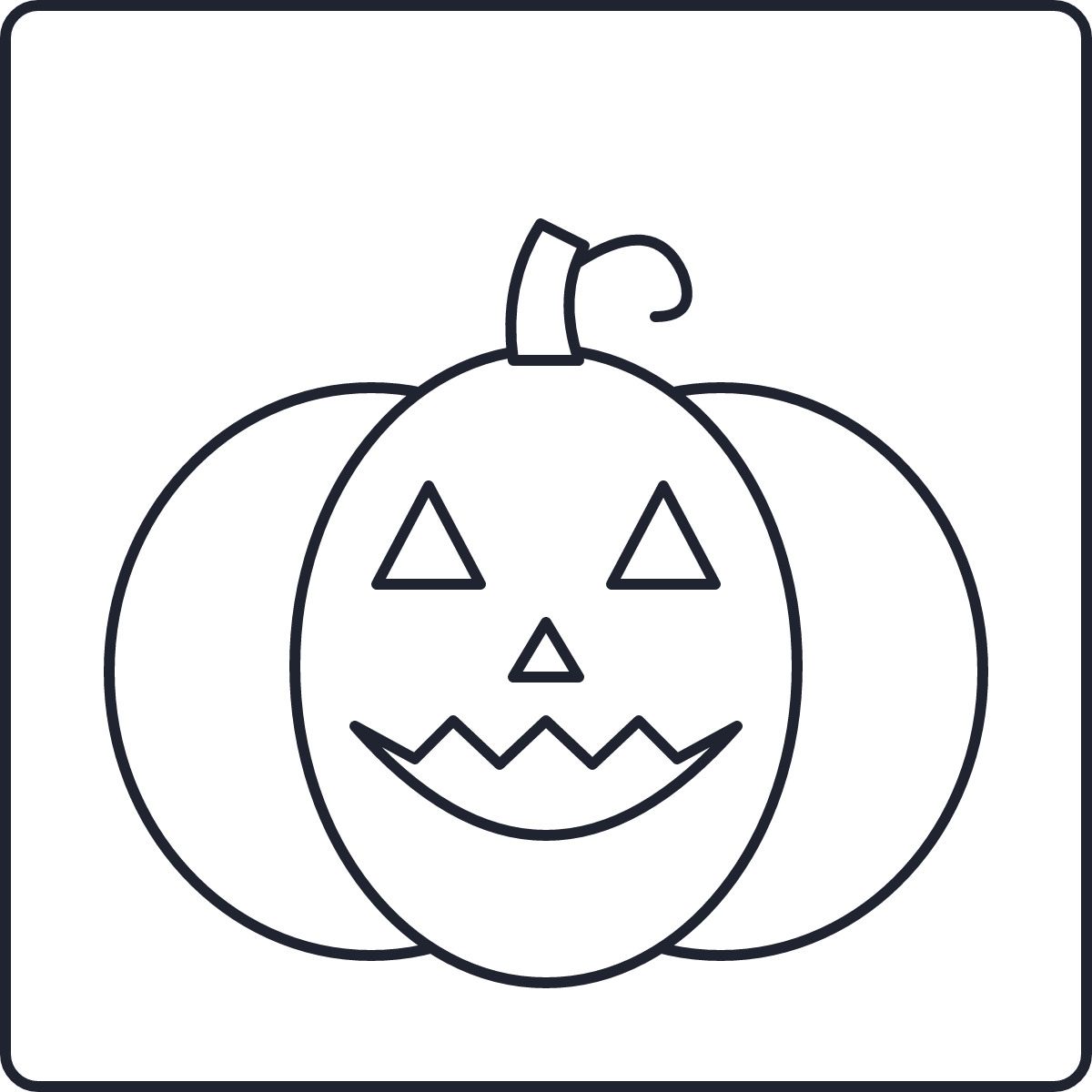
Toddler · 2–3A round, smiling jack-o'-lantern with triangle eyes, a little triangle nose and a wide zigzag grin. The pumpkin is drawn in three big lobes, so even a two-year-old has generous spaces to fill, and the carved face is its own area — color it bright yellow and the pumpkin looks lit from inside. It is the friendliest possible start to Halloween: no scary parts, just a happy face and a curly stem. Print it on A4 or US Letter, or color it online with tap-to-fill.
Three lobes and a face
A real pumpkin is ribbed, and this one is drawn as three overlapping lobes so the shape reads as a pumpkin from across the room rather than as an orange circle. For a toddler that means three big, clearly bounded areas instead of one enormous one — easier to finish, and each lobe is a small win on the way.
The carved face is a separate area on purpose. Colour it yellow and the pumpkin suddenly looks as if a candle is burning inside it, which is the moment most children understand what a jack-o'-lantern actually is. Leave it white and it is a pumpkin with a painted-on smile, which is just as good.
Carving, without the knife
Carving is the Halloween job small children most want and are least able to do. Colouring the face first is a decent stand-in: ask which shape the eyes should be, and whether the grin has teeth, and you have designed next year's pumpkin together. Older children can draw their own face on the back before choosing.
Frequently asked questions
- What age is this jack-o'-lantern page for?
- Two and up. The lobes are large and the outline is thick, so it is one of the easiest pages in the Halloween set.
- Is it scary?
- No. The face is smiling and there is nothing else on the page. It is a good first Halloween picture for a child who is unsure about the season.
Guides for grown-ups
- Coloring Pages by Age: A Simple Parent's Guide
How to choose the right coloring pages for toddlers, preschoolers, and older kids — what to look for at each age and why it matters.
- Pressing Too Hard With a Pencil — and Pressing Too Lightly
Snapped crayons, a groove through the page, a hand that aches after two lines. Why telling a child to press gently fails, and what changes it instead.
- Mixing Up Colors: Ordinary Confusion, or Color Blindness?
A four-year-old calling the grass brown is usually learning words, not seeing differently. The pattern that tells them apart, and when to get it checked.