Tiger
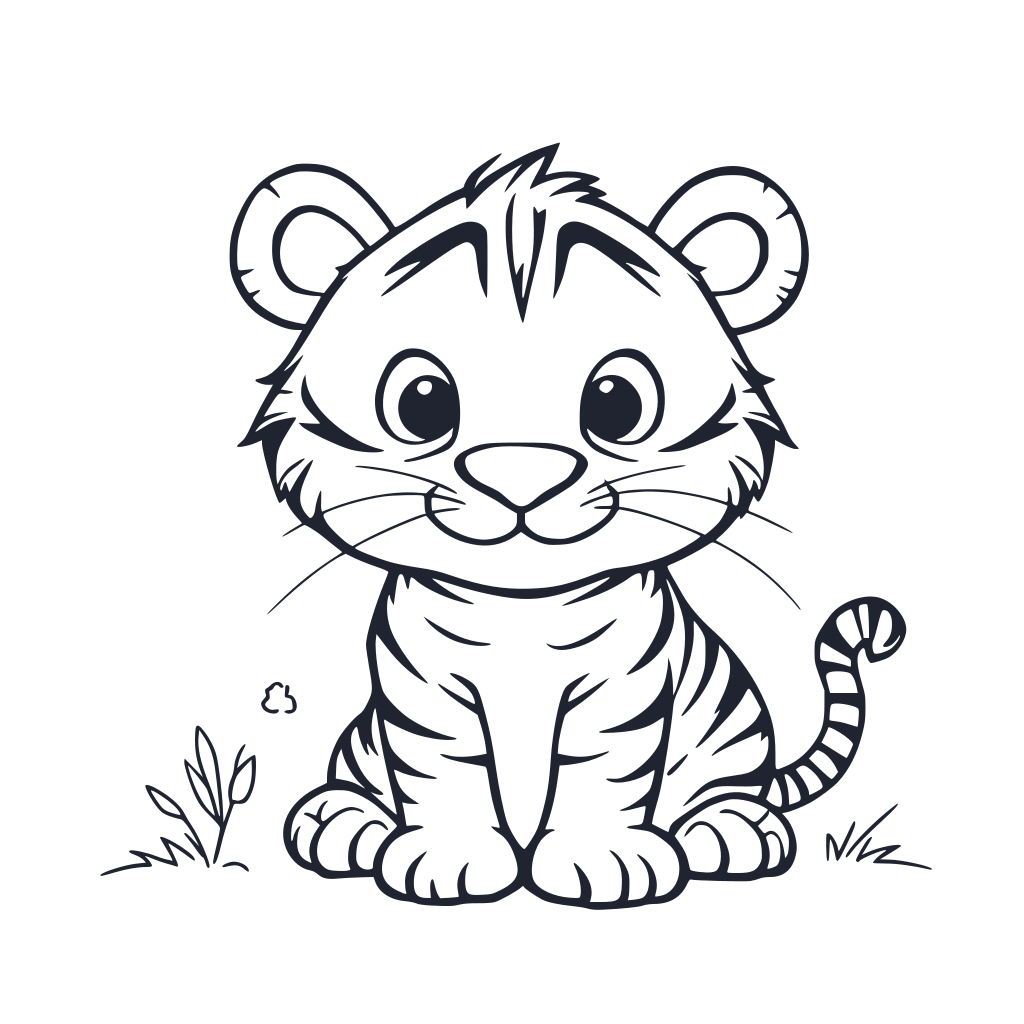
Preschool · 3–5A round-cheeked baby tiger sitting up with its striped tail curled around beside it. The stripes are the joy of this page: they break the body into dozens of small spaces, so a child can color the whole tiger orange and then go back over the stripes, which is a genuinely satisfying two-stage job. Big eyes and soft paws keep it firmly on the cute side rather than the fierce side. Coloring a tiger is a natural way to talk about big cats, about how stripes help an animal hide in tall grass, and about jungles. Print it for the table, or color it online with the paint bucket.
Orange, black and white
A tiger has three colours in a specific arrangement — orange body, black stripes, white belly and face markings — which makes it more demanding than the zebra in one way: there are three decisions per area rather than two.
The stripes are irregular and taper to points, so they are harder to follow than the zebra's regular bands.
Striped skin, not just fur
A tiger's stripes go all the way down — shave one and the pattern is still there on the skin. Children find this genuinely startling. The stripes work as camouflage in long grass, breaking up the outline of a very large animal.
Frequently asked questions
- Are a tiger's stripes on its skin?
- Yes — the pattern is in the skin as well as the fur, so it would still be visible on a shaved tiger. Each tiger's pattern is unique.
- What age is this page for?
- Six to ten. Three colours and irregular tapering stripes make it more demanding than it looks.